What Albany actually is
Four hundred kilometres south of Perth, at the foot of the Stirling Range on the shores of King George Sound, Albany is one of the oldest European settlements in Western Australia and one of the most dramatically positioned. The Southern Ocean drives serious swell against ancient granite headlands, the light is cooler and sharper than the north, and the landscape has a wildness that Perth's sandy coastal plain lacks completely.
Established in 1826 as a military outpost. Three years before the Swan River Colony. Albany has a sense of its own history that Perth still doesn't quite have. The town centre architecture reflects this: the Residency Museum, the old gaol, the Patrick Taylor Cottage (the oldest surviving house in WA) and the Georgian churches give Albany the feeling of a place that actually accumulated its past rather than constructing it later.
Albany also carries significant national weight. In November 1914, 41,000 Australian and New Zealand soldiers sailed from King George Sound for the Middle East. Most were heading for Gallipoli. The National ANZAC Centre on Mt Clarence is one of the finest war memorials in Australia, and the Sound they sailed from is visible from it on a clear day. Albany is worth the drive for the ANZAC Centre alone. The coast and the national parks make it worth staying three or four days. If you're coming from Margaret River, the coastal route via Walpole and the Valley of the Giants is better than the inland highway and about 90 minutes longer.
Torndirrup National Park
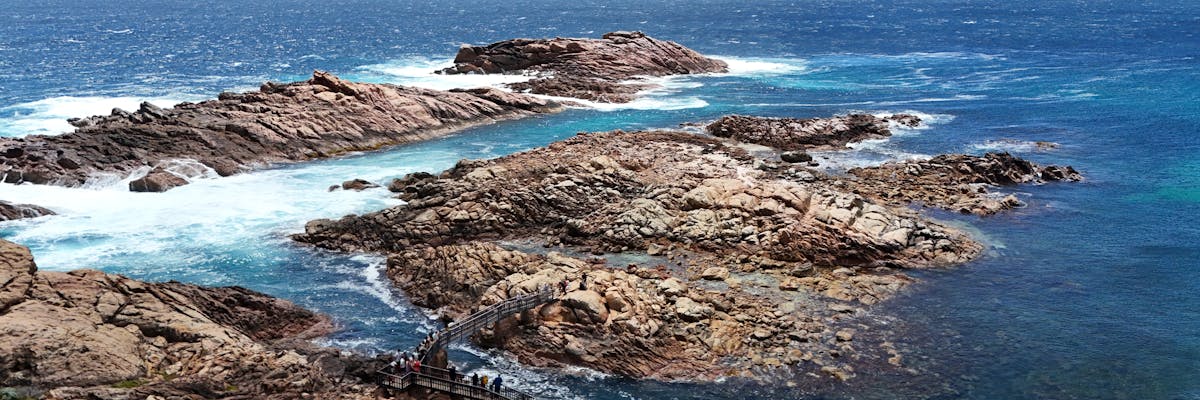
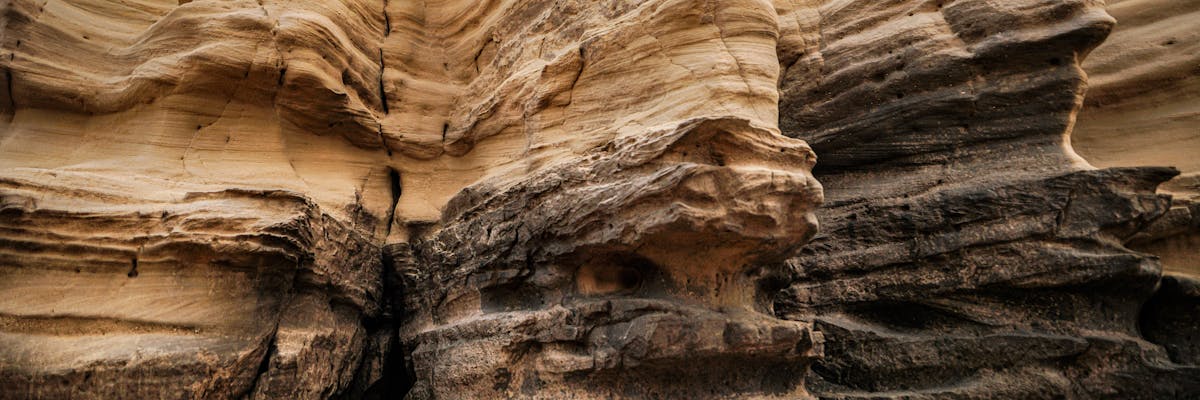
The peninsula south of Albany is Torndirrup National Park, and the coastal formations here are among the most dramatic in Australia. The Gap is the essential stop. A slot in the granite headland through which the Southern Ocean surges with a force that is genuinely alarming from the viewing platform above. At the right swell, water explodes upward through the opening in a column of spray visible from 100 metres. The warning signs are serious. People have been swept to their deaths here in unexpected waves. Stay behind the fence.
The Natural Bridge, a short walk from The Gap, is an arch of granite worn smooth by thousands of years of wave action. The Blowholes function in heavy swell, sending spray through fissures in the rock. Salmon Holes is a legendary rock fishing spot with deep water close to the ledge. Stony Hill, the highest point in the park, gives a 360-degree view across the Sound, the Southern Ocean, the Stirling Range and the rolling hills of the Great Southern. On a clear day it is one of the better views in the state.
Visit The Gap and Natural Bridge in the morning when the light comes directly into the gap and the contrast between dark granite and green-white water is sharpest, afternoon light flattens it, allow 90 minutes for the walk between the main formations.
National ANZAC Centre
Opened in April 2014 on the centenary of the Gallipoli landings, the National ANZAC Centre sits on Mt Clarence above Princess Royal Harbour with clear views over King George Sound. The last piece of Australia that departing soldiers saw in 1914. The building is architecturally serious: horizontal planes cantilevering over the hillside, faced in local granite and weathering steel.
The interior is organised around individual stories. Each visitor receives a boarding pass in the name of a soldier or nurse who sailed from Albany; the pass connects to interactive stations throughout the museum that follow that person's journey. The emotional effect builds steadily, by the end, the abstract history of Gallipoli has been replaced by something specific and human, allow at least two hours. Expect to be affected.
Valley of the Giants
About 120 kilometres west of Albany near Walpole, the Valley of the Giants is home to red tingle trees (Eucalyptus jacksonii) that grow nowhere else in the world. These are big trees. Up to 400 years old, 75 metres tall, 24 metres around the base. Some are so wide their hollow, fire-burned bases could park a car inside. The Ancient Empire Walk at ground level is free and lets you walk around and through living trees of this scale.
The Treetop Walk carries visitors through the forest canopy at up to 40 metres on a steel cable structure. It is accessible, reasonably level and can be managed with prams and wheelchairs. Come in the morning for the best light through the canopy. The Valley pairs naturally with the Walpole-Nornalup National Park. The Conspicuous Cliffs lookout is 20 minutes away and worth combining with it.
Whale watching and Whale World
Albany was Australia's last working whaling station. The Cheynes Beach Whaling Station on Frenchman Bay operated until 1978. It is now Whale World, a museum that has preserved the station essentially intact: the chaser boat, the flensing deck, the oil processing plant. It is not a comfortable museum but it is an honest one, and the exhibitions on the economics and ecology of the whaling industry are genuinely informative.
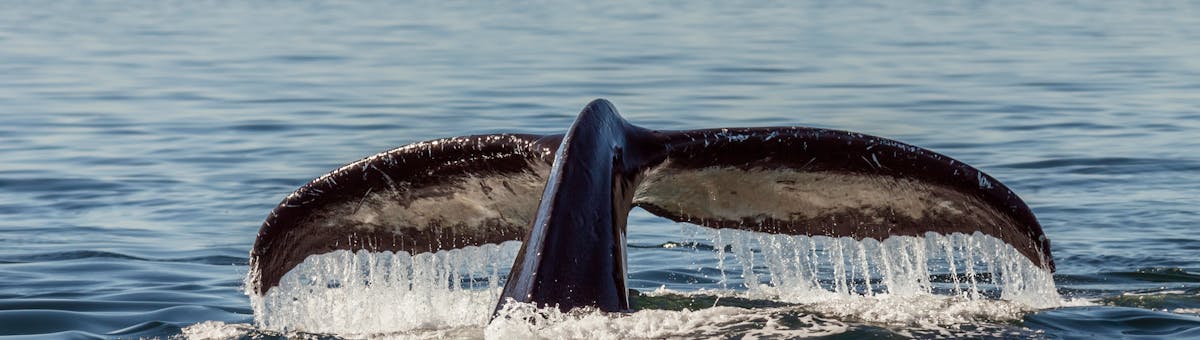
In a good piece of irony, the waters around Albany are now one of the best places in Australia to watch humpback and southern right whales in the wild. Between June and October, whale watching cruises depart from the town jetty. Southern right whales were hunted to near-extinction globally and are slowly recovering. This is one of very few places in Australia where you can reliably see them, and they tend to stay in King George Sound for extended periods during the calving season.
The Stirling Range
The Stirling Range rises north of Albany. DBCA lists the Bluff Knoll summit trail as 6.8 km return, Grade 4, climbing to 1,098 metres. It is a steep walk with many steps, not an easy stroll. Check weather, daylight and your fitness before setting off.
Spring brings wildflowers, but conditions can change quickly in any season. Carry water, warm layers and weather protection, and check the official DBCA trail guidance.
Getting to Albany
Albany is 408 kilometres south of Perth on the Albany Highway. A four-hour drive that is comfortable and straightforward. Transwa coach services connect Perth and Albany in about five hours. A car is strongly recommended once you're in the region. Torndirrup National Park, the Valley of the Giants and the Stirling Range all require independent transport. Those driving from Margaret River have a choice: the inland highway is quicker, the coastal route via Walpole is far better. See our WA itineraries page for the full South West circuit from Perth.
| Season | When | Temp | Verdict |
|---|---|---|---|
| Spring | Sep–Nov | 10-20 C | Wildflowers; whale watching through October |
| Autumn | Mar-May | 12-22 C | Comfortable; less crowded; good value |
| Summer | Dec-Feb | 16-28 C | Warm; beach walks; some bushfire risk |
| Winter | Jun-Aug | 6-14 C | Wild and stormy; dramatic coastline; quiet |
Practical notes
- ANZAC Centre: Book online for busy days. Allow at least 2 hours. Don't rush it.
- Whale watching: Season is June to October. Patriach Cruises and Southcoast Charters are the main operators.
- Valley of the Giants: 120km west of Albany. Consider an overnight in Walpole for the full experience.
- Bluff Knoll: Take warm layers even in summer. Summit conditions change fast.
- Accommodation: See our Albany accommodation guide. Middleton Beach apartments are the best-positioned options.
Continue Your Journey
Where to go next from Albany
Related Guides
Frequently Asked Questions
Albany is 408 kilometres south of Perth on the Albany Highway. A comfortable four-hour drive with one stop. Transwa coach services also connect Perth and Albany in about five hours.
June–October for whale watching; spring for wildflowers. Autumn (March-May) for comfortable temperatures and fewer visitors. Albany is worth visiting in all seasons. The coast is dramatic in winter storms.
Absolutely. The red tingle trees are unlike anything else in Australia and the treetop walk at 40 metres is impressive, it is 120 kilometres west of Albany near Walpole, allow a full day and consider an overnight in Walpole.
From June to October, whale watching cruises depart from the Albany town jetty. The whales tend to stay in King George Sound for extended periods during the calving season, making sightings very reliable.
A minimum of two hours for The Gap, Natural Bridge and the walk between them. Three hours is more comfortable. Drive from Albany town to the park entrance is about 15 minutes. Visit in the morning for the best light on The Gap.
Whale watching is generally June–October; sightings and departure dates depend on conditions and the operator. Visit Albany.